|
|
Outlooks
Monitoring and Data
About Us
Contact Us
|
| |
|
|
HOME > Expert Assessments > Drought Information > Seasonal Drought Outlook
|
| |
| |
| |
 |
| |
| |
|
| (Click on image to enlarge) |
| |
PDF Version of Seasonal Drought Outlook Graphic  |
| |
|
Heavy to excessive precipitation is forecast from the southern Lower Mississippi Valley eastward across most of Georgia and across the Carolinas. At least 2 inches is expected here, with totals locally exceeding 5 inches possible from southern Louisiana into central Georgia. Several deterministic models and the updated official December precipitation forecast favor above-normal amounts for the month as a whole as well. Forecasts for January and February are less definitive, so the December-February Seasonal Drought Outlook has been adjusted from the Lower Mississippi Valley into the mid-Atlantic region to removal or improvement, rather than persistence and adjacent development. It is possible that drought will reintensify across the reason during the first two months of 2026, but given the low human and evaporative demand this time of year, and re-intensification or development is more likely after winter. Farther west, development in the higher elevations of Colorado has been retracted given less indications for dryness. The development forecast farther east and southeast over the lower elevations remains due December and winter being drier times of the year, which is not the case farther west across the Rockies. Across the northern tier of the Contiguous U.S., the persistence forecasts for the lower elevations of Montana and northern Maine have both been rescinded in favor of removal or improvement, given somewhat stronger indicators for above-normal precipitation.
|
|
Updated Seasonal Assessment -
Heavy to excessive precipitation is forecast from the southern Lower Mississippi Valley eastward across most of Georgia and across the Carolinas. At least 2 inches is expected here, with totals locally exceeding 5 inches possible from southern Louisiana into central Georgia. Several deterministic models and the updated official December precipitation forecast favor above-normal amounts for the month as a whole as well. Forecasts for January and February are less definitive, so the December-February Seasonal Drought Outlook has been adjusted from the Lower Mississippi Valley into the mid-Atlantic region to removal or improvement, rather than persistence and adjacent development. It is possible that drought will reintensify across the reason during the first two months of 2026, but given the low human and evaporative demand this time of year, and re-intensification or development is more likely after winter. Farther west, development in the higher elevations of Colorado has been retracted given less indications for dryness. The development forecast farther east and southeast over the lower elevations remains due December and winter being drier times of the year, which is not the case farther west across the Rockies. Across the northern tier of the Contiguous U.S., the persistence forecasts for the lower elevations of Montana and northern Maine have both been rescinded in favor of removal or improvement, given somewhat stronger indicators for above-normal precipitation.
|
|
Latest Seasonal Assessment -
Since the last Seasonal Drought Outlook (SDO) release, dryness and drought have intensified across parts of the central and northern Plains, portions of the Middle Mississippi Valley, much of the western Great Lakes region, most of the South Atlantic region from central Georgia and Alabama through Florida, and parts of the Middle Atlantic region. There has also been significant deterioration across Texas and the Red River (south) and northern Lower Mississippi Valleys, with localized heavy precipitation leading to a few patches of relief in these areas. Significant intensification (2 to 3 Drought Monitor (DM) classification levels) has been noted in much of Texas and adjacent Oklahoma, north-central Montana, and portions of the South Atlantic Region.The Northeast has seen a patchwork pattern with areas of relief and deterioration, although improvement has been more common recently. Drought has continued across much of Hawaii effectively unchanged since last month, with limited areas of deterioration in central Maui and part of the eastern Big Island. Both Alaska and the American Caribbean Islands are free of drought, although abnormal dryness has been noted across central Puerto Rico and St. Croix.
In contrast, conditions have improved in large portions of the drought entrenched across large sections of the Rockies and Far West, with no areas of notable deterioration. Unusually heavy early-season precipitation has engendered improvements of 2 or 3 DM classifications over portions of California, the central and northern Front Range of the Rockies (especially the southern tier of Colorado), and parts of the central West Coast and northern Cascades. The water year is off to a good start in most of the West, although snowpack is lower than normal due to above-normal temperatures. Improvements of 2 to 3 DM classifications were also noted over much of the Ohio Valley, areas near the Ohio and Mississippi Rivers' confluence, east of Lake Erie, and parts of the central and northern Appalachians, with adjacent areas of 1-classification improvements. Other areas of improvement include a swath from the south-central Great Plains through the northern Lower Mississippi Valley, the Upper South, and the Carolinas.
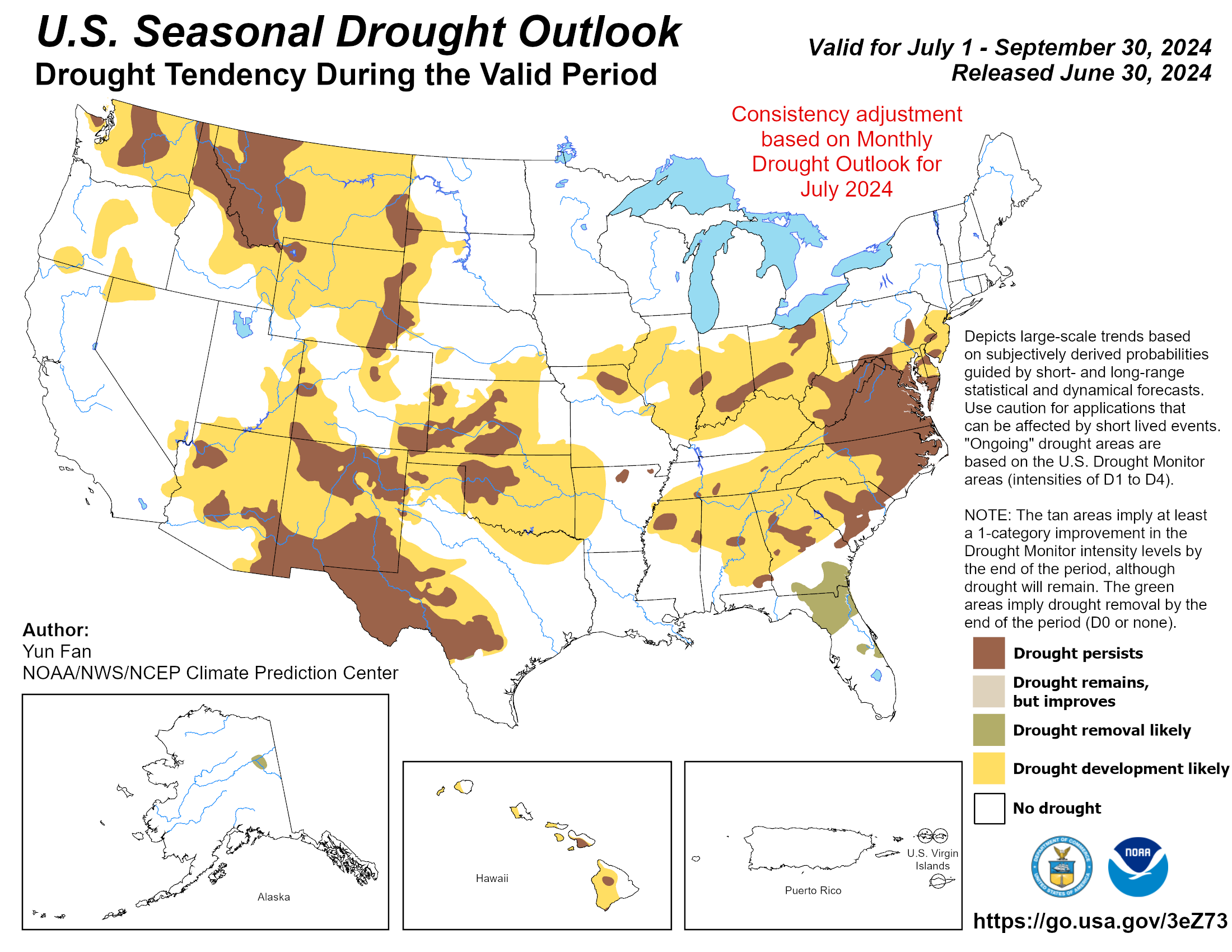
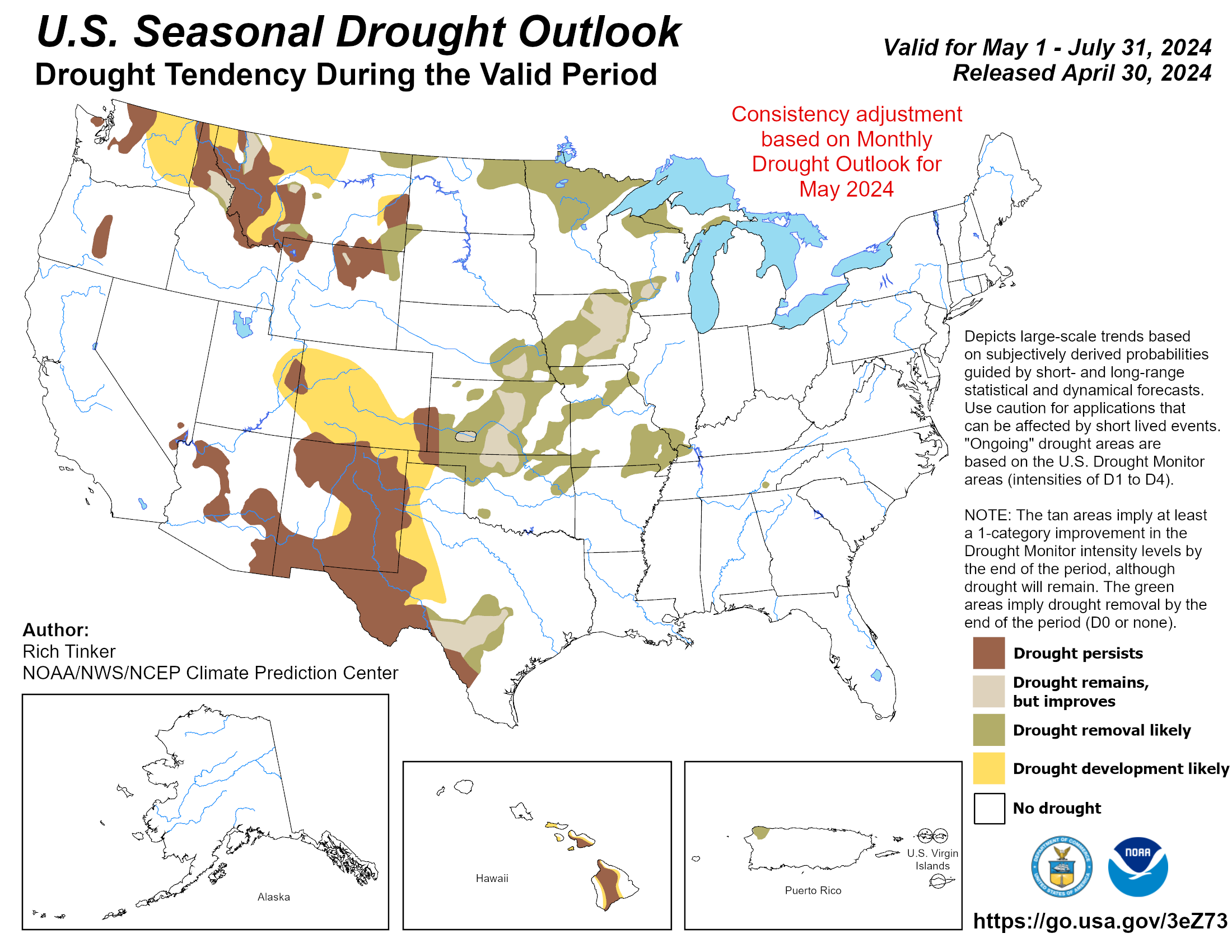
The SDO through the end of meteorological winter calls for more improvement for the Pacific Northwest and the northern half of the Intermountain West while persistence and some areas of deterioration are expected farther east in northern Montana and farther south across the Southwest and the southern and central Rockies. Expected dryness during the winter months means deterioration is expected from much of the southern Plains eastward across the southern tier of states and northward across the Southern and Middle Atlantic regions, with adjacent areas of development expected to create a solid swath of drought across these areas by the end of February. Dry winter climatology led to a forecast for persistence or deterioration across the northern half of the Plains and the Upper Midwest. Meanwhile, improvement is expected in a swath from central Texas northeastward into the eastern Great Lakes region, with several inches of rain possible in the next week across central and southern sections of this region. Improvement is also anticipated for most of the Northeast, except the northern half of Maine. Improvement also seems likely across all areas of drought in Hawaii while Alaska and the American Caribbean islands should remain drought-free.
Forecaster: Richard Tinker
Next Seasonal Drought Outlook issued: December 18, 2025 at 8:30 AM EST
Seasonal Drought Outlook Discussion
|
|
|
|
 www.nws.noaa.gov